
Deixe um recado
Se você estiver interessado em nossos produtos e quiser saber mais detalhes, deixe uma mensagem aqui e responderemos assim que possível.


Integrated heat-tracing sampling composite tubes, also known as constant-temperature heat tracing sampling tubes, are core supporting components of online gas monitoring and analysis systems. They integrate sampling pipelines, electric heat tracing units, thermal insulation layers and protective outer jackets into one unit. Through full-process constant-temperature heat tracing, they avoid condensation, crystallization, component adsorption or pipeline blockage during sample gas transmission, ensure component fidelity and stable delivery of sample gas from the sampling point to the analysis end, and are widely used in environmental monitoring, industrial process analysis and other fields.
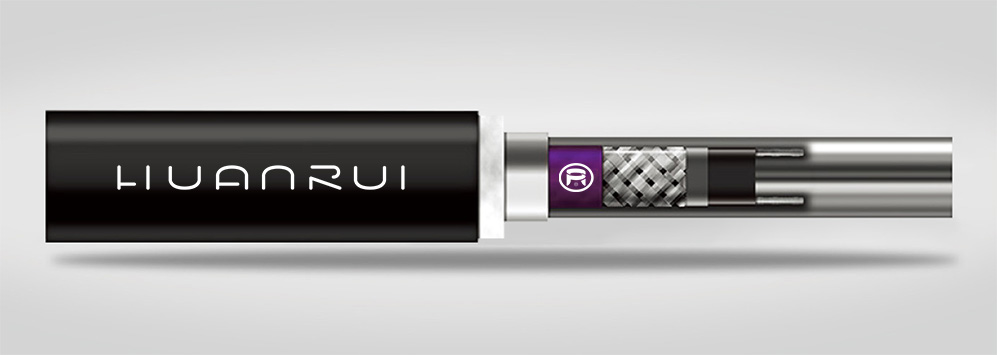
1. Working Principle
The core principle of integrated heat-tracing sampling composite tubes is to continuously compensate heat through the electric heat tracing cables integrated inside the tubes, so that the entire sampling pipeline is maintained within a set constant temperature range, and the temperature is higher than the dew point temperature of the sampled gas. After entering the pipeline from the sampling point, the sample gas remains gaseous throughout the transmission process. This prevents water-soluble gas components from dissolving and particulate matter from adhering to the pipe wall due to water vapor condensation, and also avoids condensation of high-boiling components, ensuring that the composition of the sample gas entering the analysis instrument is consistent with that at the sampling point, and guaranteeing the accuracy of monitoring and analysis data.
2. Core Components
Sampling pipeline: The part in direct contact with the sample gas, usually made of corrosion-resistant materials such as polytetrafluoroethylene (PTFE), 316L stainless steel and Hastelloy alloy, adaptable to sample gas conditions with different corrosivity and temperatures. It has various specifications such as single-channel and dual-channel, corresponding to the demands of single sample gas delivery and sampling + backflushing double circuit respectively.
Electric heat tracing unit: The built-in heat tracing core, divided into two categories: self-regulating heating cables and constant-wattage heating cables. The self-regulating type can automatically adjust output power with ambient temperature, has built-in temperature limiting characteristics and high safety, suitable for conventional monitoring scenarios. The constant-wattage type has stable output power and high temperature control accuracy, suitable for more demanding scenarios such as high temperature and long-distance sampling.
Thermal insulation and protective layer: The outer layers of the heating cable and sampling tube are covered with a thermal insulation layer to reduce heat loss and improve heating efficiency. The outermost layer is a flame-retardant and corrosion-resistant protective outer jacket, which protects the internal structure and meets the requirements of electrical insulation and fire prevention.
3. Core Features
High constant-temperature transmission accuracy: Uniform heat tracing throughout the whole process, with temperature control accuracy up to ±1℃~±2℃. It stably maintains the sample gas temperature above the dew point, and fundamentally avoids data deviation and pipeline blockage caused by condensation.
High integration degree: Prefabricated as an integrated structure at the factory. On-site, there is no need to lay heating cables separately or wrap thermal insulation layers. Installation can be completed only by connecting the joints at both ends, which greatly shortens the construction period and reduces on-site installation errors.
Strong material adaptability: Sampling tubes can be made of different corrosion-resistant materials according to working conditions, and heat tracing units can be configured with explosion-proof products, adapting to various industrial environments such as ordinary, anti-corrosion and explosion-proof.
Energy-saving and safe operation: Self-regulating products have power self-regulation capability: the higher the temperature, the lower the power. Combined with a thermostat, on-demand heating can be realized, saving more than 20% energy compared with separately laid heat tracing. The whole product has multiple protections such as insulation, flame retardancy and explosion-proof, ensuring safe and reliable operation.
4. Main Application Scenarios
CEMS Continuous Emission Monitoring Systems
This is the core application scenario of integrated heat-tracing sampling composite tubes. In continuous flue gas emission monitoring systems of thermal power, iron and steel, cement, chemical, waste incineration and other industries, the sampling composite tube connects the chimney sampling probe and the analysis cabinet, maintaining a constant temperature of 120℃~180℃ throughout the process. It prevents water-soluble pollutants such as SO₂, NOₓ and HCl from dissolving in condensed water, and also avoids smoke and particulate matter adsorbing on the pipe wall, ensuring the accuracy of pollutant concentration measurement data. It is the standard configuration for CEMS sample gas pretreatment and transmission.
Online Process Gas Analysis Systems
In production facilities in petrochemical, coal chemical, fine chemical and other fields, they are used for online sampling and analysis of process gas. For example, process gas monitoring of synthetic ammonia units, refining units and reactors. The heat tracing sampling tube maintains the corresponding process temperature, prevents crystallization, polymerization or condensation of media in the sample gas, ensures accurate data of online analysis instruments, and supports stable control of the production process.
VOCs Online Monitoring Systems
In scenarios such as VOCs monitoring at plant boundaries of industrial parks, VOCs emission monitoring of pollution sources, and Leak Detection and Repair (LDAR), integrated heat tracing sampling composite tubes can maintain the sample gas in the range of 80℃~150℃, preventing high-boiling VOCs components such as benzene series and non-methane total hydrocarbons from condensing and adsorbing on the pipe wall, avoiding low monitoring data and ensuring the authenticity of VOCs monitoring results.
Continuous Monitoring of Toxic and Harmful Gases
In coal mines, petrochemical, pharmaceutical and other factories with flammable, explosive or toxic and harmful gases, they are used for sampling and transmission of fixed gas monitoring systems. Explosion-proof integrated sampling composite tubes meet explosion-proof standards. At the same time, heat tracing prevents water and impurities in the gas from condensing and blocking the sampling pipeline, ensuring long-term stable operation of the monitoring system.
Process Monitoring of Denitrification and Desulfurization Systems
In flue gas monitoring at the inlet and outlet of flue gas denitrification and desulfurization devices, heat tracing sampling tubes are used to transmit flue gas samples before and after the reaction, monitor the concentration changes of NOₓ and SO₂, evaluate the denitrification and desulfurization efficiency, and provide data support for system operation regulation.
Conclusion
With the characteristics of integrated structure, stable constant-temperature transmission and wide adaptability to working conditions, integrated heat-tracing sampling composite tubes have become necessary supporting components in the field of online gas monitoring and analysis. Their core value lies in ensuring the component fidelity of sample gas during transmission, which directly determines the reliability of monitoring and analysis data, and plays an irreplaceable role in environmental compliance monitoring, industrial production process control and other scenarios.
 Suporte a redes IPv6





Deixe um recado
Escaneie para o WeChat :
Escaneie para o WhatsApp :